
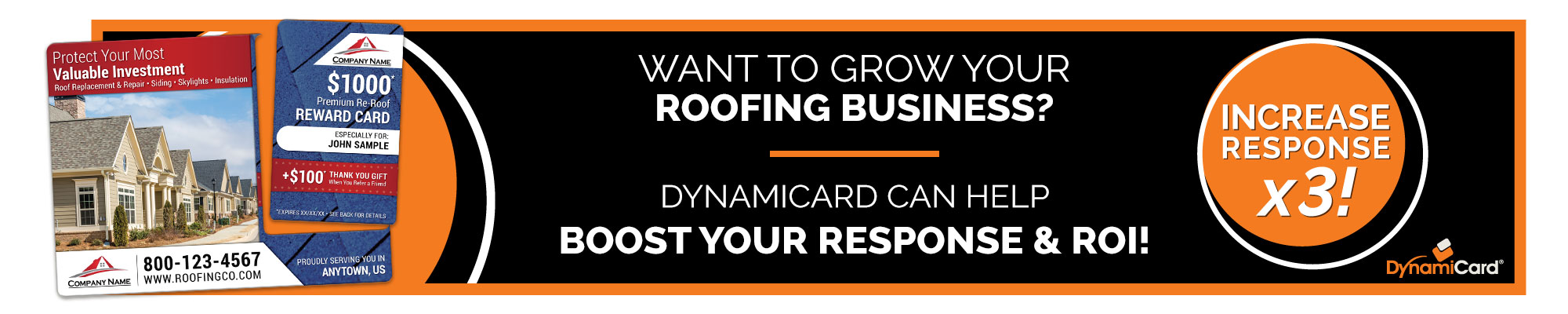
Roofing Direct Mail That Reaches Homeowners When Roof Needs Become Urgent
Put your roofing company in front of homeowners before and after the moments that create real demand — from aging roofs and inspections to severe weather and storm-related damage.
DynamiCard helps roofing contractors use roofing direct mail to build local visibility, reach relevant homeowners, promote timely offers, and measure campaign response.
Roofing marketing is different from many other home-service categories. A homeowner may not need a roofer for years. Then one storm, leak, inspection, insurance event, or aging-roof concern can turn roofing into an immediate priority. That makes timing, geography, homeowner targeting, and message relevance especially important.
DynamiCard combines audience strategy, postcard creative, mailing, QR technology, call tracking, delivery tracking, and analytics so roofing contractors can build campaigns around actual homeowner opportunity, not just general awareness.
Why Roofing Contractors Use Direct Mail
Roofing decisions are often triggered by events. Those events may include:
- Storm damage
- High winds
- Hail
- Heavy rain
- Visible roof wear
- Leaks
- Insurance inspections
- Home-sale preparation
- Aging materials
- Neighborhood replacement activity
Direct mail gives roofing companies a way to reach homeowners within affected or priority areas while the service is relevant. A strong roofer direct mail marketing campaign can support:
- Storm-response campaigns
- Roof inspections
- Replacement opportunities
- Repair awareness
- Insurance-related outreach
- Preventive inspection campaigns
- New-market expansion
- Homeowner education
- Customer reactivation
- Brand awareness
The strategy should be built around the homeowner’s situation, not simply the contractor’s service list.
Roofing Direct Mail Starts with Geography
Roofing is highly location-sensitive. A contractor usually serves defined markets, and weather events can make some areas much more important than others. DynamiCard can help structure campaigns around:
- Service territories
- ZIP codes
- Neighborhoods
- USPS carrier routes
- Storm-affected markets
- Expansion areas
- Branch service areas
- Other strategically relevant geographies
The goal is not to mail the largest possible area. It is to reach homes where roofing demand is most likely to exist.
Storm-Triggered Roofing Direct Mail
Storm events create one of the clearest use cases for roofing direct mail. After severe weather, homeowners may suddenly need:
- Roof inspections
- Leak assessment
- Repair estimates
- Replacement consultations
- Insurance-related documentation
- Contractor guidance
A roofing campaign launched around a real event can be far more relevant than a generic postcard mailed without timing context. The postcard should immediately answer:
- Why am I receiving this?
- What may have happened to my roof?
- What should I do next?
- Who can help?
Roofing Direct Mail by Weather Event
The right message depends on what actually happened in the neighborhood.
After Hail
A post-hail campaign may focus on:
- Inspection availability
- Damage awareness
- Roof-condition evaluation
- Homeowner education
- Consultation opportunities
The creative should avoid alarmist language or unsupported claims about damage. Instead of telling a homeowner their roof is damaged, use responsible language such as:
- “Recent hail may have affected roofs in your area.”
- “If your neighborhood experienced hail, consider having your roof evaluated.”
That keeps the campaign relevant without overstating what is known about an individual property.
After Windstorms
Strong winds can also create urgent homeowner concerns. Campaigns can focus on:
- Missing or damaged shingles
- Visible roof changes
- Inspection availability
- Preventive evaluation
- Repair or replacement consultation
Again, the strongest message is informative rather than fear-driven. Homeowners should understand why the campaign is timely and what next step is available.
After Heavy Rain
Heavy rain may expose existing roof issues. A campaign following a significant rain event can emphasize:
- Leak awareness
- Roof inspections
- Moisture-related concerns
- Preventive evaluation
- Repair consultation
The postcard should connect the event to a practical homeowner action.
Event-Based Targeting vs. Evergreen Roofing Campaigns
Not every roofing campaign needs a storm. Some campaigns should run regardless of the weather.
Event-Based Roofing Campaigns
Best suited for:
- Hail
- Windstorms
- Heavy rain
- Other localized weather events
The value comes from timing.
Evergreen Roofing Campaigns
Best suited for:
- Aging-roof awareness
- Roof inspections
- Replacement planning
- Neighborhood visibility
- New market entry
- General contractor branding
Both strategies can work. They simply solve different marketing problems.
Target Homeowners, Not Just Addresses
Depending on available data and campaign goals, relevant homeowner segments may include:
- Owner-occupied homes
- Homes within the contractor’s service territory
- Properties of certain ages
- Older housing stock
- Homes in storm-affected areas
- New homeowners
- Previous roofing customers
- Customers associated with previous repair work
- Other appropriate property or household criteria
Audience selection should follow the campaign. A storm inspection campaign and a replacement campaign should not automatically use the same list.
Home Age as a Roofing Marketing Signal
Roofing demand can correlate with property age and roof lifecycle, but the exact relationship depends on roofing material, installation date, maintenance, climate, and many other factors. That means a property-age strategy should be used carefully. Rather than assuming:
Old home = bad roof
a targeted campaign can use housing age as one signal when building an audience. The messaging should still focus on inspection, evaluation, and homeowner choice rather than making unsupported assumptions about individual roof condition.
New Homeowners as a Roofing Audience
New homeowners may have different priorities from long-term residents. They may be reviewing:
- Inspection reports
- Deferred maintenance
- Roofing history
- Repair recommendations
- Long-term replacement planning
A direct mail campaign can introduce the roofing company early in the homeowner relationship. Possible messaging might focus on:
- “New home? Get to know the condition of your roof.”
- “Start homeownership with a clearer picture of your roof.”
The actual offer should reflect the roofer’s verified services.
Roofing Offers That Create a Reason to Respond
The strongest roofing offer depends on the contractor’s business model. Potential campaign concepts include:
Roof Inspection Offer
Create a clear entry point for homeowners who are uncertain about roof condition.
Storm Damage Evaluation
Useful following severe weather when responsibly worded.
Replacement Consultation
For homeowners considering larger roofing projects.
Repair Assessment
A practical CTA for homeowners with visible concerns.
Seasonal Inspection
Can support preventive marketing before or after harsh weather seasons.
New Customer Offer
Where the contractor has an approved promotion.
Financing Consultation
If verified financing options are actually available.
Specific discounts, insurance claims, financing terms, warranties, guarantees, and savings claims should always come from the roofer and be verified before publication.
Roofing Postcards Should Build Trust Before They Sell
Roofing is a high-trust service. Many homeowners are cautious about contractors, especially after major storms. That makes creative quality particularly important.
Clear Company Identity
Make it easy to understand who is contacting the homeowner.
Local Relevance
Explain why the message matters in the recipient’s area.
Responsible Claims
Avoid exaggerated statements about damage or insurance outcomes.
Simple Offer
Make the next step understandable.
Visible Contact Information
Do not make homeowners search for the phone number or QR code.
Professional Presentation
The mailpiece should reinforce credibility rather than look like a generic storm-chaser flyer.
Roofing Postcard Marketing Examples
These are strategic concepts, not claims about completed DynamiCard campaigns.
“Recent Storm in Your Area?”
“How Old Is Your Roof?”
“Before the Next Heavy Rain”
“We’re Roofing in Your Neighborhood”
“New Home? Know Your Roof.”
Neighborhood Saturation Around Roofing Projects
One potentially powerful roofing direct-mail strategy is to market around areas where the contractor is already active. If a roofing company is completing work in a neighborhood, nearby homeowners may notice the project, have similarly aged homes, have experienced similar weather, or be more receptive to roofing messaging.
A postcard can reinforce physical visibility already occurring in the neighborhood. The message should remain truthful. Do not imply a relationship with neighbors unless one actually exists.
EDDM for Roofing Contractors
Every Door Direct Mail can make sense when the campaign needs broad coverage throughout a specific geographic area. That can be useful for:
- Storm-affected neighborhoods
- Neighborhood awareness
- Expansion markets
- General roof inspection campaigns
EDDM focuses primarily on location. It may be particularly useful when most homes in the selected route are relevant to the offer.
Targeted Roofing Direct Mail
Some roofing campaigns need more audience specificity. A targeted strategy may make sense when:
- Homeownership matters
- Property characteristics matter
- Home age matters
- A specific customer segment matters
- Existing customer data is being used
- New movers are the target
- Geographic saturation would create excessive waste
The right method should follow the marketing objective.
Use Customer Data for Roofing Reactivation
Roofing companies may also have previous customer data that can support future campaigns. Examples could include customers associated with:
- Previous repairs
- Inspections
- Maintenance
- Other verified roofing services
A past customer already knows the company. That means the messaging can be different from a prospecting campaign. Instead of introducing the brand, a reactivation postcard may focus on:
- Seasonal inspection
- Service reminders
- Additional roofing needs
- Updated services
- Other relevant offers
Any customer data use should follow applicable privacy practices and company policies.
Roofing Plastic Postcards
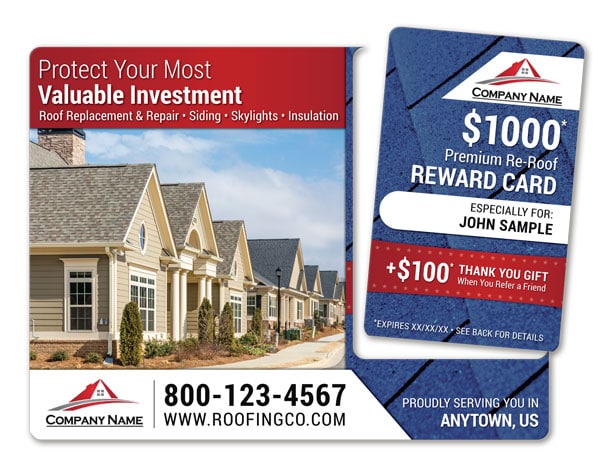
DynamiCard offers roofing plastic postcards with snap-out promotional components, alongside traditional paper formats. Plastic postcards may be worth considering when:
- Physical differentiation matters
- The contractor wants a more durable mailpiece
- A promotional component supports the offer
- The campaign needs a more distinctive physical presentation
Traditional paper may be appropriate for other campaigns. The campaign goal should determine the product.
Add QR Codes to Roofing Postcards
Roofing is a visual and information-heavy service. A postcard may introduce the need, while a QR code gives homeowners a way to continue digitally. Depending on the roofing company’s actual website or systems, a QR destination may support:
- Inspection requests
- Service information
- Project galleries
- Financing information
- Contact forms
- Another campaign-specific destination
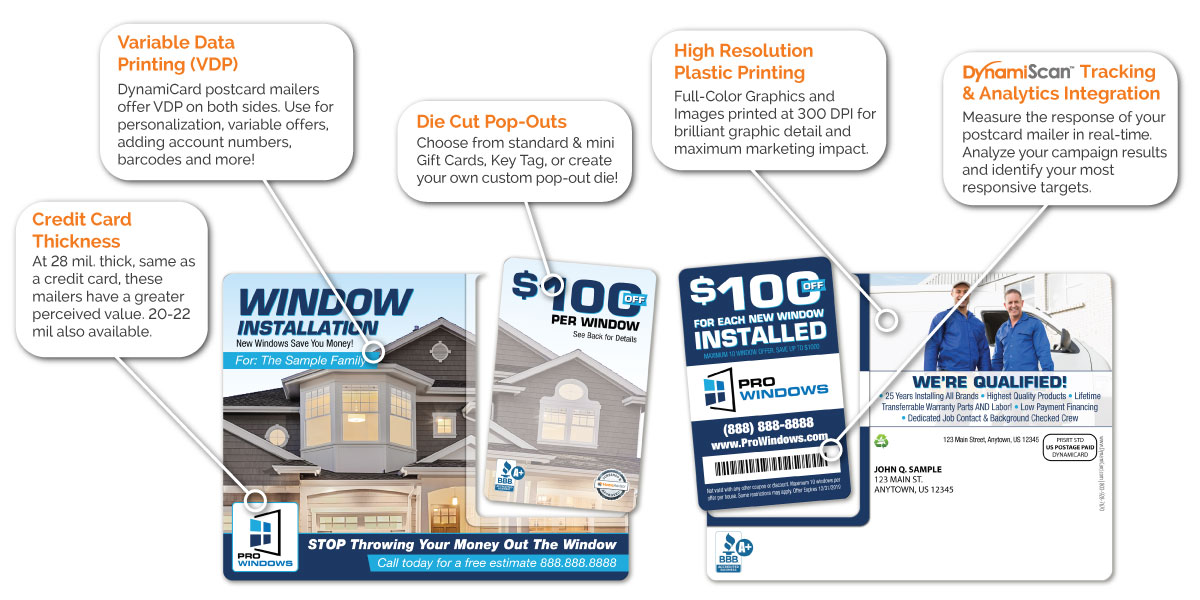
DynamiCard’s broader technology stack includes dynamic QR tracking, creating a measurable digital response path from physical mail.
Track Phone Calls from Roofing Direct Mail
For roofing contractors, the phone may be one of the most important response channels. Homeowners often want to ask questions about:
- Inspections
- Visible damage
- Estimates
- Service areas
- Scheduling
- Insurance-related processes
Call tracking can help associate phone activity with the mailing campaign. The postcard should make the phone response prominent when calls are the desired conversion.
Track Mail Delivery Around Storm Campaigns
Timing becomes especially important when the campaign is tied to a real event. Delivery tracking can provide additional context around when postcards enter the affected market. That can help roofing companies coordinate:
- Sales staffing
- Call-center availability
- Digital advertising
- Follow-up activities
- Offer timing
DynamiCard already positions in-home delivery tracking as a company capability. This can be particularly useful when event relevance changes quickly.
Roofing Direct Mail Attribution
Roofing direct mail attribution means connecting campaign activity with downstream customer outcomes. That may include:
- Phone calls
- QR scans
- Inspection requests
- Leads
- Estimates
- Signed projects
- Revenue
A mailing can generate plenty of inquiries without generating profitable roofing jobs. That is why attribution should go further than response count alone. The strongest roofing campaign reporting asks:
- Which mailings generated qualified leads?
- Which areas produced estimates?
- Which estimates became projects?
- Which campaign produced profitable revenue?
Track Roofing Campaigns with DynamiScan
DynamiCard positions DynamiScan as its proprietary response-tracking and analytics platform, including profitability, trends, new customers, and discrete customer capture. For roofing contractors, that creates opportunities to evaluate:
- Audience performance
- Response patterns
- Geographic trends
- Offer effectiveness
- New customer activity
- Campaign profitability
This is an important differentiator because roofing contractors often market across multiple neighborhoods, events, or service territories.
Addressable Geofencing for Roofing Campaigns
Storm-related and replacement-focused roofing decisions often involve multiple customer touchpoints. A homeowner may receive a postcard today but wait days or weeks before contacting a contractor.
Addressable geofencing can support a cross-channel strategy where the physical mailpiece is reinforced by digital advertising. The campaign can become:
- Postcard reaches the home
- Brand becomes familiar
- Digital exposure reinforces the message
- Homeowner eventually calls, scans, or submits a lead
This can be particularly relevant for replacement campaigns with longer consideration periods.
Roofing Direct Mail for Insurance-Related Events
Insurance-related roofing campaigns require especially careful wording. Direct mail should not promise:
- Claim approval
- Insurance coverage
- Specific reimbursement
- Guaranteed replacement
- Legal outcomes
Instead, campaigns can responsibly focus on verified contractor services such as:
- Roof inspection
- Damage documentation
- Estimate preparation
- Repair or replacement consultation
The roofing company should review all insurance-related claims before mailing.
Roofing Direct Mail by Campaign Type
Replacement Campaigns
Replacement campaigns often target a different customer journey than storm-response campaigns. The homeowner may not have an immediate leak. They may be planning, comparing options, budgeting, or considering long-term property value.
That means the creative can focus on:
- Aging roof awareness
- Replacement consultation
- Material options
- Project planning
- Financing, if actually available
- Contractor credibility
These campaigns may benefit from repeated visibility rather than one emergency-style touchpoint.
Repair Campaigns
Repair-focused postcards should emphasize speed and clarity. Potential themes include:
- Leak repairs
- Missing shingles
- Storm-related repairs
- Roof inspection
- Minor damage evaluation
The CTA should be direct — “Call for an inspection” or “Scan to request service” — rather than presenting a vague list of every roofing service.
Roofing Direct Mail for New Markets
Entering a new service area creates a credibility challenge. Homeowners may not recognize the roofer yet. A new-market campaign should introduce:
- Company name
- Roofing services
- Service territory
- Verified differentiators
- Local availability
- Contact information
- Appropriate offer
Repeated campaigns can then build familiarity over time.
Roofing Direct Mail for Multi-Location Contractors
Larger roofing businesses may manage several branches or territories. That creates more sophisticated attribution questions.
- Which markets respond?
- Which storm areas generate qualified leads?
- Which branches convert leads more effectively?
- Which offers perform by geography?
Tracking should make those differences visible rather than blending every location together.
Measuring Roofing Direct Mail Performance
For roofing campaigns, the most useful metrics may include:
Delivered Mail
How much of the intended campaign reached the market?
Phone Calls
How many inquiries came from the campaign?
QR Engagement
How many homeowners used the digital response path?
Inspection Requests
How many recipients requested evaluation?
Qualified Leads
How many inquiries became legitimate roofing opportunities?
Estimates
How many leads moved into an estimate?
Sold Projects
How many opportunities became signed roofing projects?
Revenue
How much attributable revenue resulted?
Cost Per Acquisition
What did it cost to acquire a new roofing customer?
ROI
How did the campaign return compare with the campaign investment?
This is more useful than simply publishing a broad response-rate percentage.
How DynamiCard Builds Roofing Direct Mail Campaigns
- Identify the Roofing OpportunityStorm response? Inspections? Repairs? Replacement? New market?
- Define the GeographyIdentify service areas, event-affected zones, or priority neighborhoods.
- Build the AudienceSelect homeowners and other appropriate segments using available data.
- Develop the OfferCreate a reason to respond that matches the homeowner’s situation.
- Build Roofing-Specific CreativeMake the message timely, credible, and easy to understand.
- Choose the MailpieceSelect paper, plastic, or another appropriate format.
- Add TrackingUse QR, phone, delivery, DynamiScan, or another appropriate combination.
- Print and MailLaunch the campaign.
- Attribute the ResponseTrack calls, leads, estimates, and projects where possible.
- Refine the Next CampaignUse actual performance data to improve future geography, targeting, timing, and offers.
Why Roofing Contractors Choose DynamiCard
DynamiCard brings targeted mailing, real-time analytics, and a complete campaign system together for roofing contractors.
Storm & Event Strategy
Build campaigns around real market conditions.
Homeowner Targeting
Focus direct mail on relevant homes and service territories.
Audience Data
Use geographic, customer, and appropriate property-related targeting.
Roofing Postcard Creative
Develop mailpieces around inspections, repairs, replacements, or other specific objectives.
Paper & Plastic Options
Choose the physical format based on strategy.
DynamiScan Analytics
Analyze campaign performance and customer response.
Call & QR Tracking
Capture multiple response paths.
Delivery Tracking
Add event and campaign timing context.
Addressable Geofencing
Extend direct mail into digital advertising.
The objective is not simply more mail. It is more relevant homeowner outreach with clearer attribution.
Frequently Asked Questions About Roofing Direct Mail
What is roofing direct mail?
Roofing direct mail uses physical postcards or other mailpieces to reach homeowners with roof inspections, repairs, replacements, storm-related, or other roofing campaigns.
When should roofers use direct mail?
Direct mail can support both evergreen campaigns and event-driven outreach following storms, hail, wind, heavy rain, or other relevant conditions.
Who should receive roofing postcards?
The audience may include homeowners within service areas, appropriate property segments, previous customers, new homeowners, or households within event-affected markets.
Is EDDM good for roofing?
EDDM can work well for geographically concentrated neighborhood or storm-response campaigns. Targeted mail may be more appropriate when homeowner or property characteristics matter.
What offers work for roofing postcards?
Potential offers include inspections, damage assessments, repair consultations, replacement consultations, or approved financing/promotional opportunities.
Can roofing postcard phone calls be tracked?
Yes. Call tracking can help connect phone inquiries with direct mail campaigns when implemented as part of the response strategy.
Can roofers track mail delivery?
DynamiCard currently positions in-home delivery tracking as a core capability.
Can roofing direct mail be combined with digital advertising?
DynamiCard’s broader technology architecture supports addressable geofencing and cross-channel marketing.
What is a good roofing direct mail response rate?
Response rates vary based on campaign type, geography, timing, and offer — an evergreen inspection campaign and a storm-triggered campaign, for example, can perform very differently. Rather than a universal benchmark, ROI should be evaluated using verified data specific to your own campaigns.