
Call Tracking for Direct Mail That Connects Phone Leads to Your Campaign
Measure the calls your postcards generate with direct mail call tracking from DynamiCard.
A customer receives your postcard. They pick up the phone. What happens next?
Without the right tracking in place, that call can become disconnected from the marketing campaign that generated it. DynamiCard helps businesses close that measurement gap with call tracking for direct mail.
By assigning trackable phone numbers to direct mail campaigns, businesses can gain greater visibility into incoming calls, campaign response, call activity, and the marketing efforts generating customer conversations.
DynamiCard’s existing phone-tracking technology includes capabilities such as real-time call-detail reporting, caller information, email notifications, campaign-specific tracking numbers, call-duration reporting, and optional call recording.
Instead of asking:
“Did our direct mail generate any calls?”
“Which campaign generated the calls and what happened after customers picked up the phone?”
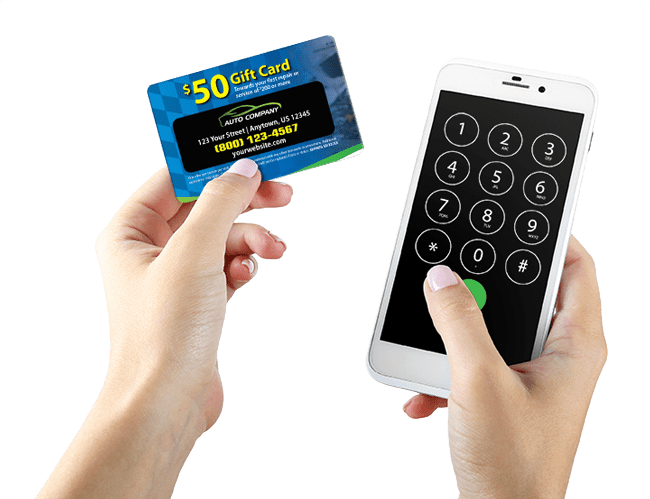
What Is Direct Mail Call Tracking?
Direct mail call tracking uses dedicated phone numbers to help businesses identify calls associated with specific mailing campaigns. The concept is straightforward.
A trackable number is placed on the postcard or mailpiece. When recipients call that number, the call can be routed to the appropriate business line while generating campaign-response information.
That creates a measurable connection between:
- Direct Mailpiece
- Tracked Phone Number
- Incoming Call
- Lead
- Customer
For businesses where phone calls are an important conversion event, this provides another way to evaluate direct mail performance.
Why Track Phone Calls from Direct Mail?
Traditional direct mail can create response through multiple channels. Some recipients scan QR codes. Some visit websites. Some redeem offers. Others simply call.
If phone calls aren’t tracked appropriately, an important part of campaign response can become difficult to attribute. Direct mail phone tracking can help businesses understand:
- How many calls a campaign generates
- When calls occur
- Which campaign number generated the call
- How long calls last
- Which callers may require follow-up
- How campaigns compare
- Whether phone activity is contributing to leads and customers
The objective isn’t simply collecting call statistics. It’s understanding whether direct mail is creating valuable customer conversations.
How DynamiCard Call Tracking Works
DynamiCard’s current phone-tracking platform can assign a dedicated toll-free number to a direct mail campaign. Calls to that number are routed while campaign activity is recorded for reporting and analysis.
A typical campaign can follow this process:
- Create the Direct Mail CampaignDefine the audience, offer, creative, and desired customer response.
- Assign a Tracking NumberUse a dedicated phone number associated with the campaign.
- Print the Number on the MailpieceMake calling one of the postcard’s clear response options.
- Launch the MailingDeliver the campaign to the intended audience.
- Capture Call ActivityIncoming activity associated with the tracked number can be recorded in reporting.
- Review Call PerformanceEvaluate call volume, timing, duration, and other available information.
- Connect Calls to Business OutcomesWhere possible, follow calls through leads, appointments, sales, or other meaningful conversions.
Campaign-Specific Phone Numbers
One of the most important call-tracking concepts is separating response by campaign. DynamiCard’s existing platform allows a unique toll-free number to be assigned to individual direct mail campaigns. That can make comparisons much more useful.
Imagine a business runs three campaigns:
Campaign A
New-customer postcard
Campaign B
Previous-customer reactivation
Campaign C
Seasonal promotion
If all three use the same general business number, identifying which campaign influenced each call can be difficult. Dedicated tracking numbers create clearer campaign attribution.
Phone Tracking Postcards
A phone tracking postcard combines a physical direct-mail offer with a dedicated number used to measure phone response. The number should be treated as part of the campaign’s conversion architecture. That means it needs to be:
- Easy to find
- Easy to read
- Clearly associated with the CTA
- Routed correctly
- Tested before launch
- Supported by staff prepared to handle the calls
The postcard might say:
Call Today to Request Your Free Estimate
Call to Schedule Your Appointment
Call to Claim This Offer
The exact CTA should match the campaign objective.
Real-Time Call Detail Reporting
DynamiCard’s existing phone-tracking technology includes real-time call-detail reporting. Current reporting capabilities described on the site include filtering or reporting based on:
- Date
- Call length
- Calls to specific numbers
- Calls from specific numbers
- Caller names
- Caller phone numbers
That gives businesses more context than a simple total call count. For example:
- Did calls arrive immediately after the campaign entered homes?
- Did one campaign generate longer conversations?
- Did call activity increase on particular days?
- Did one campaign produce more follow-up opportunities?
Those questions can help turn phone activity into actionable campaign information.
Get Notifications When Direct Mail Generates a Call
Fast response can matter. DynamiCard’s current system can provide an email notification when a tracked toll-free number receives a call. According to the existing page, notification information can include Caller ID, the destination number, time of day, and call length.
That can help teams stay aware of campaign activity without waiting for a later reporting cycle. For lead-driven businesses, timely awareness may also support faster follow-up.
Track Call Duration
Not every phone call has equal value. A five-second wrong number is different from a ten-minute conversation with a prospective customer.
DynamiCard’s existing Call Analytics functionality tracks call duration and average call length as part of its campaign reporting. Call-duration data can provide useful context when analyzing campaigns.
But duration alone should not be treated as proof of a conversion. A long call is still not automatically:
- A qualified lead
- An appointment
- A sale
- A customer
The strongest measurement strategy follows the call further into the business funnel.
Call Tracking vs. Conversion Tracking
This distinction matters. Call tracking tells you that a phone interaction occurred. Conversion tracking asks what that interaction produced.
A direct mail campaign might generate:
- 100 tracked calls
- 70 qualified inquiries
- 45 appointments
- 35 completed appointments
- 20 new customers
The business outcome is not 100 calls. The deeper outcome is 20 customers. That is why DynamiCard’s call tracking should be positioned as an important part of attribution — not the entire attribution story.
Direct Mail Call Attribution
Attribution connects the marketing activity to the customer response. For phone-driven direct mail, the attribution chain might look like:
- Postcard Mailed
- Postcard Delivered
- Customer Calls Tracking Number
- Call Becomes Qualified Lead
- Lead Converts
- Revenue Generated
The closer a business can connect these stages, the more meaningful campaign reporting becomes.
Track Different Offers with Different Phone Numbers
Dedicated tracking numbers can also help businesses compare campaign concepts. For example:
Offer A
$50 Promotional Credit — Tracking Number A
Offer B
Free Consultation — Tracking Number B
Offer C
Seasonal Service Promotion — Tracking Number C
Offer examples are illustrative only. Comparing phone response can help identify which campaign generated more conversations. Connecting those conversations with downstream sales can reveal which offer generated more business. Those aren’t always the same answer.
Compare Direct Mail Markets with Call Tracking
Call tracking can also support geographic testing. A business might run:
Market A
Campaign-specific phone number.
Market B
Different campaign-specific phone number.
Market C
Another campaign-specific phone number.
This can help create clearer reporting around which campaigns or markets are generating calls. Geographic analysis becomes even more useful when combined with audience, delivery, and conversion data.
Call Tracking for Multi-Location Businesses
Multi-location businesses have an additional attribution challenge. They need to understand not only whether direct mail generated response, but where that response belongs.
Campaign architecture may be structured around:
- Individual locations
- Regional markets
- Franchise territories
- Different offers
- Different audiences
Tracking numbers can help separate activity across those campaigns. This may allow marketing teams to compare:
- Location A vs. Location B
- Market A vs. Market B
- Offer A vs. Offer B
- Audience A vs. Audience B
That creates a more useful framework for deciding where future campaign dollars should go.
Call Tracking for Home Services
Phone calls are especially important for home-service businesses. A homeowner with a:
- Plumbing issue
- HVAC problem
- Roof concern
- Electrical need
- Pest-control issue
- Remodeling project
may prefer calling rather than completing an online form. A tracked direct-mail number can help connect that call with the campaign that introduced the company.
For home services, the deeper conversion path might be:
Call → Qualified Lead → Estimate → Booked Job → Revenue
Call Tracking for HVAC Direct Mail
HVAC campaigns can promote:
- Seasonal maintenance
- System replacement
- Repair services
- Tune-ups
- Approved promotional offers
A tracked phone number gives homeowners an immediate response option while helping the HVAC company attribute inbound calls to the campaign. Call tracking can be especially useful when multiple seasonal mailings are being compared.
Call Tracking for Plumbing Direct Mail
Plumbing marketing often involves high-intent phone response. A recipient may keep the postcard until a plumbing need develops and then call the number directly. That makes phone attribution particularly valuable.
The campaign can then evaluate:
Calls generated → Qualified plumbing leads → Booked service calls → Completed jobs
rather than judging success only by mailing volume.
Call Tracking for Roofing Direct Mail
Roofing campaigns may be triggered by:
- Storm events
- Seasonal conditions
- Inspection campaigns
- Replacement opportunities
- Specific homeowner segments
A unique tracking number can help separate phone response from one campaign or market from another. That becomes especially useful when a roofing company operates across multiple territories.
Call Tracking for Dental & Chiropractic Direct Mail
Healthcare practices often rely on phone conversations for new-patient questions and appointment requests. A direct-mail recipient may want to ask:
- Are you accepting new patients?
- Where are you located?
- What are your hours?
- How do appointments work?
A tracked number can help practices associate those inbound conversations with the mailing campaign. The deeper metric should then be:
Call → Appointment → Completed Visit → New Patient
rather than call volume alone.
Call Tracking for Auto Repair Postcards
Auto repair campaigns may generate calls around:
- Service promotions
- Maintenance
- Inspections
- Customer reactivation
- Seasonal services
- New-customer offers
A dedicated campaign number can help repair shops measure phone response and connect calls with appointments or completed repair orders.
Call Tracking for Real Estate Direct Mail
Real estate professionals can use call tracking to measure inquiries from:
- Seller campaigns
- Buyer campaigns
- Geographic farming
- Listings
- Investor campaigns
- Property-specific mailings
Different tracking numbers can also help separate different farm areas or campaign concepts.
Call Tracking for Restaurant Direct Mail
Restaurants may use tracked numbers for campaigns involving:
- Catering
- Reservations
- Events
- Large-party inquiries
- Location-specific promotions
For campaigns where the primary customer action is an online order, QR tracking may be more relevant. For catering or reservation campaigns where phone conversations matter, call tracking can play a larger role. The response mechanism should match the actual customer journey.
Combine Phone Tracking with QR Code Tracking
Customers do not all respond the same way. One recipient may call. Another may scan. Providing both options can create two measurable response paths:
Postcard → Tracked Phone Call
Postcard → Dynamic QR Scan
DynamiCard already maintains both Phone Tracking and Dynamic QR Code Tracking as distinct technologies in its direct-mail platform. The technologies should therefore complement each other rather than compete for the same keyword intent.
Combine Phone Tracking with Delivery Tracking
Knowing when mail enters homes can provide useful context for call activity. DynamiCard’s separate Delivery Tracking platform provides campaign reporting designed around mail progress and in-home delivery visibility.
That creates a useful sequence:
- Mail begins arriving
- Phone activity begins
- Leads develop
- Conversions occur
Businesses can then examine whether call activity changes after the campaign reaches the market.
Connect Phone Response with DynamiScan Analytics
Phone tracking provides visibility into calls. DynamiScan supports a broader direct-mail analytics strategy.
DynamiCard currently positions DynamiScan around campaign response, demographics, offer performance, customer capture, and profitability analysis. The technologies therefore serve different roles.
Phone Tracking
Who called and when?
QR Tracking
Who engaged through the QR response path?
Delivery Tracking
When did the campaign enter the market?
DynamiScan
What can redemption and customer data tell us about campaign performance?
Tracking & Analytics
How do those signals contribute to the overall measurement strategy?
Optional Call Recording for Quality Assurance
DynamiCard’s existing phone-tracking platform also offers optional call recording. The current page states that recorded calls can be reviewed online and searched based on information such as date, recording length, and calls to or from particular numbers.
For businesses using this functionality, recordings may support:
- Quality assurance
- Sales coaching
- Customer-service review
- Lead-quality analysis
- Training
Businesses using call recording should ensure their implementation complies with applicable federal, state, and local consent and privacy requirements.
What Should You Measure from Direct Mail Calls?
Call volume is only the beginning. A stronger campaign measurement framework can include:
Total Calls
How much phone activity did the campaign generate?
Unique Callers
How many distinct prospects called where measurable?
Call Duration
How long did conversations last?
Qualified Leads
How many calls represented genuine sales opportunities?
Appointments
How many callers scheduled?
Estimates
How many calls generated quotes or estimates?
Customers
How many callers ultimately converted?
Revenue
What attributable revenue came from those customers?
Cost Per Lead
How much campaign investment was required to generate a qualified lead?
Cost Per Customer
How much was required to acquire a customer?
ROI
How did attributable return compare with total campaign investment?
Why Call Volume Alone Can Be Misleading
Consider two campaigns.
Campaign A
- 100 tracked calls
- 20 qualified leads
- 5 customers
Campaign B
- 60 tracked calls
- 35 qualified leads
- 15 customers
Campaign A generated more calls. Campaign B generated more customers. If the marketing team only reports call volume, it could choose the wrong campaign to repeat. The real objective is not:
Make the phone ring more.
Generate more valuable customer opportunities.
Use Call Data to Improve the Next Mailing
Tracking becomes valuable when it changes future decisions. Campaign results can help businesses investigate:
- Which offer generated calls?
- Which campaign generated qualified calls?
- Which audience produced better leads?
- Which geographic market performed better?
- Which mailing produced more customers?
- Which campaign should be repeated? Which should be changed?
The next campaign can then be informed by actual response rather than assumptions.
How DynamiCard Builds Trackable Direct Mail Campaigns
- Define the Business ObjectiveDetermine what the campaign should generate.
- Calls?
- Appointments?
- Estimates?
- Sales?
- Identify the AudienceBuild the campaign around relevant prospects or customers.
- Develop the OfferGive recipients a credible reason to respond.
- Create the MailpieceDesign around one clear message and CTA.
- Assign the Tracking NumberConnect the phone-response path with the campaign.
- Test Call RoutingVerify that calls reach the appropriate destination before mailing.
- Launch the CampaignPrint and mail.
- Monitor Call ActivityReview available notifications, caller information, duration, and reporting.
- Track Business OutcomesConnect calls with leads, appointments, customers, and revenue where possible.
- Improve the Next CampaignUse results to refine targeting, offers, creative, and campaign strategy.
Why Choose DynamiCard for Direct Mail Call Tracking?
Call tracking at DynamiCard sits within a broader direct-mail marketing platform.
Dedicated Campaign Numbers
DynamiCard’s existing system supports assigning unique toll-free numbers to direct mail campaigns.
Real-Time Call Detail Reports
Review available caller and call-activity information.
Email Notifications
Receive alerts when tracked calls occur.
Call Analytics
Compare campaign performance and call-duration information.
Optional Call Recording
Review recorded conversations for appropriate quality-assurance applications.
DynamiScan
Connect phone response with DynamiCard’s broader analytics capabilities.
QR Tracking
Provide an additional digital response pathway.
Delivery Tracking
Add campaign-delivery timing and progress visibility.
Direct Mail Production
DynamiCard’s broader platform also encompasses audience data, design, production, postal support, and campaign analytics.
The result is more than a tracking number. It is another measurable connection between a physical mailpiece and a potential customer.
Frequently Asked Questions About Call Tracking for Direct Mail
What is call tracking for direct mail?
Call tracking for direct mail uses dedicated phone numbers to help associate inbound calls with specific postcards or mailing campaigns.
How does direct mail call tracking work?
A trackable number is printed on the mailpiece. Calls to that number are routed to the business while campaign call activity is captured for reporting.
Does DynamiCard provide dedicated tracking numbers?
DynamiCard’s current platform provides dedicated toll-free numbers that can be featured on direct-mail postcards.
Can I use different numbers for different campaigns?
Yes. DynamiCard specifically describes assigning unique toll-free numbers to individual direct-mail campaigns for performance analysis.
What information can DynamiCard call tracking report?
The existing platform describes reporting involving call date, call length, caller information, calls to or from specific numbers, and other call details.
Can I receive notifications when someone calls?
Yes. DynamiCard currently offers email notifications when calls arrive through tracked numbers.
Can direct mail calls be recorded?
DynamiCard’s existing platform offers optional call-recording functionality. Businesses should comply with applicable consent and privacy laws when recording calls.
Can call tracking measure ROI?
Call tracking provides attribution data that can contribute to ROI analysis. For a stronger ROI calculation, businesses should connect tracked calls with downstream leads, customers, revenue, and total campaign costs.
Should I use call tracking or QR tracking?
It depends on customer behavior. Many campaigns can benefit from both: call tracking for recipients who prefer phone conversations and QR tracking for those who prefer a digital response.