QR Code Direct Mail That Connects the Mailbox to Measurable Digital Engagement
Turn physical postcards into trackable digital touchpoints with dynamic QR code direct mail from DynamiCard.
A postcard can get your business into the home. A QR code can show you what happens next.
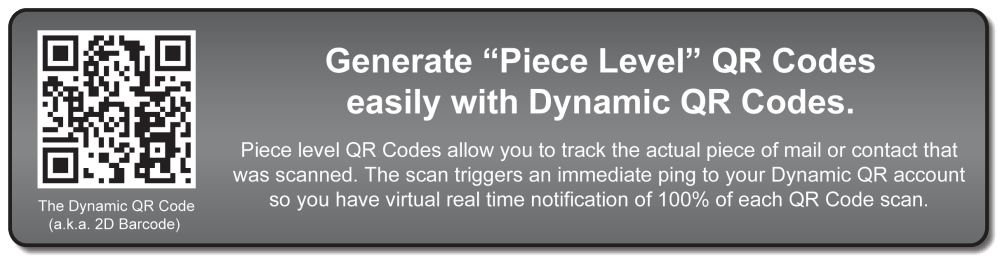
DynamiCard combines QR code direct mail with dynamic tracking technology to give recipients an immediate path from a physical mailpiece to a digital experience while giving marketers greater visibility into campaign engagement.
Recipients can scan directly from a postcard to a campaign-specific destination such as a landing page, offer, appointment experience, product page, menu, video, or other digital content.
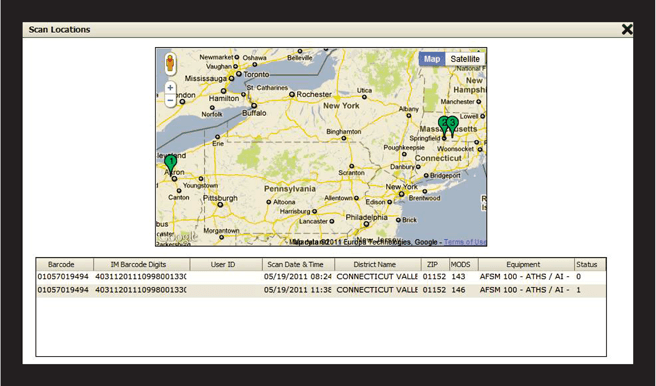
DynamiCard’s existing QR technology can also capture engagement information and map QR scan locations, helping businesses better understand where interactions are occurring.
That transforms the QR code from a convenient link into a measurable part of the direct mail campaign.
QR CODE SCAN LOCATIONS ON GOOGLE® MAPS
What Is QR Code Direct Mail?
QR code direct mail combines a physical mailpiece with a scannable QR code that directs the recipient into a digital experience.
The concept creates a bridge between offline and online marketing.
- A customer receives your postcard.
- They see an offer or message.
- They scan the QR code with their phone.
- They arrive at the destination created for the campaign.
That destination might encourage them to:
- Claim an offer
- Request an appointment
- View a product
- Explore a service
- Watch a video
- View a menu
- Find a location
- Complete a form
- Learn more about the promotion
- Take another campaign-specific action
At the same time, direct mail QR tracking creates another measurable engagement point.
Instead of simply knowing that the postcard was mailed, businesses can begin evaluating whether recipients interacted with it digitally.
Why Add QR Codes to Direct Mail?
Direct mail and digital marketing do different things well. Physical mail creates a tangible interaction. Digital experiences can make it easier to continue the customer journey. A QR code connects them.
Make Response Easier
Recipients don’t have to manually type a long website address. They can scan and move directly into the campaign experience.
Create a Measurable Interaction
A scan provides an engagement signal that traditional untracked mail cannot provide by itself.
Extend the Mailpiece
A postcard has limited physical space. A QR code can connect recipients with significantly more information online.
Build Campaign-Specific Experiences
The destination can align directly with the offer on the mailpiece.
Learn More About Engagement
DynamiCard’s current QR platform is designed to gather engagement statistics and display QR scan locations on Google Maps.
Dynamic QR Codes vs. Static QR Codes
Not every QR code works the same way. Understanding the distinction matters when QR codes are being used as part of a measurable marketing campaign.
Static QR Codes
A static QR code generally contains a fixed destination. Once created and printed, the destination encoded into the QR code cannot typically be changed without creating and printing another code.
Static QR codes can be useful for simple applications where:
- The destination will not change
- Advanced campaign management is unnecessary
- Tracking is not a priority
Dynamic QR Codes
A dynamic QR code creates greater campaign flexibility by routing the scan through a managed link.
That can make it possible to manage the digital destination and gather campaign engagement information without changing the physical QR graphic already printed on the mailpiece.
For marketers, that difference is important.
Dynamic QR postcards can become part of a measurable campaign infrastructure rather than simply functioning as printed website shortcuts.
What Makes a QR Postcard Trackable?
A QR code alone does not automatically create a meaningful attribution strategy. The campaign needs to be structured around measurement.
A trackable QR postcard should connect:
The physical mailpiece to A defined digital destination to A measurable customer action
For example:
- Postcard Delivered
- QR Code Scanned
- Landing Page Visited
- Offer Claimed
- Lead Generated
- Customer Conversion
The QR scan is important. But it should not necessarily be the final conversion metric.
Track and Map QR Code Scans
DynamiCard’s existing QR Code Tracking page specifically promotes the ability to track QR scans and display scan locations on Google Maps. That geographic engagement layer can help businesses visualize where QR interactions are occurring.
Depending on the campaign and reporting available, that information may help marketers investigate questions such as:
- Where are people interacting with the campaign?
- Are scans concentrated in particular geographic areas?
- Are certain markets producing stronger engagement?
- Does scan activity align with the intended mailing geography?
- Should future campaigns prioritize different markets?
Location information becomes more useful when evaluated alongside the campaign’s audience and conversion data.
QR Scan Tracking vs. Customer Conversion Tracking
This distinction is critical. A scan is an engagement event. It is not automatically a sale.
Imagine a campaign generates:
500 QR scans
That sounds encouraging. But the business still needs to ask:
- How many scanners became leads?
- How many claimed the offer?
- How many booked appointments?
- How many visited the location?
- How many purchased?
- How much attributable revenue was generated?
The stronger measurement model is:
Scan → Lead → Conversion → Revenue
rather than stopping at:
Scan
This is also where DynamiCard’s broader Tracking & Analytics capabilities become important.
Use QR Codes to Create a Better Direct Mail Customer Journey
QR technology is most effective when the destination continues the message from the postcard. The experience should feel connected.
If the postcard promotes:
20% Off Your First Service
the QR code should not send the recipient to a generic homepage where they need to search for the promotion. It should send them directly toward the relevant campaign experience.
The transition should be:
Physical Message → Digital Continuation
not:
Physical Message → Start Over
QR Codes for Direct Mail Landing Pages
Dedicated landing pages are one of the strongest QR destinations. A campaign landing page can be built around:
- One audience
- One offer
- One message
- One conversion objective
That makes it easier to maintain continuity between the mailpiece and digital experience.
A good QR landing page should generally be:
Mobile-friendly
Most QR scans happen from phones.
Fast
Recipients should not wait for a heavy page to load.
Campaign-specific
The headline and offer should match the mailpiece.
Conversion-focused
The next action should be obvious.
Easy to use
Avoid unnecessary navigation and distractions.
QR Codes for Offers & Promotions
Direct mail frequently revolves around an offer. A dynamic QR code can give recipients another way to access it. Potential campaigns might include:
- New-customer promotions
- Loyalty offers
- Service promotions
- Restaurant offers
- Retail campaigns
- Membership campaigns
- Seasonal promotions
- Customer reactivation
- Grand openings
The QR CTA should explain what the customer receives. Instead of:
SCAN ME
consider:
Scan to Claim Your Offer
That tells the recipient why the action is worthwhile.
QR Codes for Appointment-Based Businesses
For businesses where appointments matter, a QR code can reduce friction between interest and action. Depending on the business’s actual scheduling technology, the destination might allow customers to:
- Request an appointment
- Schedule a consultation
- Choose a location
- Submit an inquiry
- Learn about available services
Industries that may benefit include:
- Dental practices
- Chiropractic practices
- HVAC companies
- Plumbing companies
- Roofing contractors
- Auto repair shops
- Real estate professionals
- Other appointment-driven businesses
The campaign should make the desired next step obvious.
QR Codes for Restaurants
Restaurant postcards can use QR codes to connect recipients with digital content such as:
- Menus
- Online ordering
- Reservations
- Location information
- Promotional pages
- Loyalty enrollment
The QR code should serve the campaign. If the mailpiece promotes a particular offer, send the customer toward that offer rather than a generic restaurant homepage.
QR Codes for Retail Direct Mail
Retail campaigns can use dynamic QR postcards for:
- Promotional offers
- Product launches
- Store information
- Loyalty programs
- New openings
- Customer reactivation
- Online product experiences
A physical postcard can create awareness while the QR code gives customers a faster route into the digital shopping or promotional experience.
QR Codes for Home Services
Home-service campaigns often depend on fast response. A homeowner receiving an HVAC, plumbing, roofing, pest-control, landscaping, or other service postcard may want more information before calling. A QR code can provide a path to:
- Service information
- Quote requests
- Appointment requests
- Offer details
- Location/service-area information
- Other relevant campaign pages
Phone tracking can then complement QR tracking for customers who prefer to call.
QR Codes for Real Estate Postcards
Real estate mailpieces often need to communicate more information than a postcard can comfortably hold. QR codes can connect recipients to:
- Property pages
- Virtual tours
- Listing information
- Open-house details
- Home-value pages
- Seller resources
- Buyer resources
- Agent information
A CTA such as:
Scan to Tour the Property
is far more specific than:
Scan for More Information
QR Codes for Multi-Location Businesses
Multi-location businesses can use QR technology to create more localized campaign experiences. Depending on the campaign architecture, mailpieces may direct recipients toward:
- Local store pages
- Location-specific offers
- Local appointment paths
- Market-specific content
- Franchise locations
This can help maintain centralized campaign strategy while creating a more locally relevant customer experience.
Personalized QR Direct Mail
QR campaigns can become even more sophisticated when combined with variable-data printing and audience segmentation. Rather than sending every recipient the exact same experience, businesses may create different mailpiece versions or destinations for different:
- Customer segments
- Markets
- Locations
- Offers
- Audience groups
The purpose should not be personalization for its own sake. The objective is relevance.
QR Codes on Plastic Postcards
QR tracking can also be combined with one of DynamiCard’s core product differentiators: plastic postcard mailers. A plastic postcard can create the physical impact. The QR code creates the digital pathway.
DynamiCard’s current site positions Plastic Postcards as one of its primary direct-mail products and Dynamic QR Code Tracking as part of its technology ecosystem. Together, they can support campaigns designed around both physical differentiation and digital response.
QR Codes on Traditional Direct Mail
QR technology is not limited to plastic postcards. The strategy can also be applied to other appropriate direct-mail formats. The important factors are:
- Scan visibility
- QR size
- Contrast
- Placement
- CTA
- Digital destination
- Tracking strategy
The physical format should support reliable scanning without allowing the QR code to dominate the creative unnecessarily.
How to Design a QR Code Direct Mail Campaign
- Give People a Reason to ScanA QR code without context creates unnecessary friction. Tell the recipient what they get. Examples:
- Scan to Claim Your Offer
- Scan to Schedule
- Scan to View the Menu
- Scan to Tour the Property
- Scan to Request a Quote
- Keep the Code Easy to FindDon’t hide the primary response mechanism in visual clutter.
- Maintain Strong ContrastThe QR code needs to remain easy for mobile devices to recognize.
- Protect the Quiet ZoneAvoid placing text or graphics too close to the code.
- Test Before PrintingThe code should be tested across multiple mobile devices before the campaign enters production.
- Match the Destination to the CampaignDon’t send customers somewhere irrelevant.
- Optimize for MobileThe QR experience begins on a phone.
What Should the QR Code Link To?
The answer depends on the campaign objective.
| Campaign Goal | Potential QR Destination |
|---|---|
| Generate Leads | Lead form |
| Schedule Appointments | Scheduling experience |
| Promote an Offer | Offer landing page |
| Restaurant Campaign | Menu/order/promotion page |
| Real Estate | Listing or property page |
| Retail | Product or promotional page |
| Home Services | Quote/service page |
| Membership | Enrollment information |
| Education | Video or information page |
| Event | Registration page |
The destination should minimize the number of steps between scan and desired action.
QR Code Direct Mail Campaign Examples
These are strategic concepts, not claims about completed DynamiCard campaigns.
“Scan to Claim Your Offer”
“Scan to Schedule Your Appointment”
“Scan to View the Menu”
“Scan to Tour This Home”
“Scan to Get Your Free Estimate”
Use QR Codes with Phone Tracking
Not every customer wants to scan. Some prefer to call. Providing both QR and phone response options can give recipients a choice. That creates two measurable pathways:
Postcard → QR → Digital Conversion
Postcard → Phone Call → Lead
DynamiCard already operates a dedicated Phone Tracking service alongside its QR and Delivery Tracking technologies. The reporting strategy should account for both response paths rather than judging the campaign solely by QR activity.
Combine QR Tracking with Delivery Tracking
Timing adds context to engagement. DynamiCard’s Delivery Tracking technology currently provides reporting around mail progress, including first scans, out-for-delivery reporting, in-home performance reporting, and results by state.
Combining delivery and QR information can help marketers examine:
When mail began reaching the market
against
When digital engagement began occurring
That creates a more useful campaign timeline.
Connect QR Activity with DynamiScan
QR tracking answers important digital-engagement questions. DynamiScan answers a broader set of response and customer questions.
DynamiCard’s existing Tracking & Analytics platform says DynamiScan can identify demographics responding to campaigns, compare offer performance, examine average ticket relationships, and capture respondent names and addresses through point-of-sale redemption.
The technologies therefore have different but complementary roles.
Dynamic QR Tracking
Measures digital scan activity and engagement.
DynamiScan
Supports deeper redemption, customer, demographic, and campaign analysis.
Used together where appropriate, they can provide a more complete view of the campaign journey.
QR Code Direct Mail Attribution
Direct mail attribution should go beyond simply reporting how many postcards were mailed. QR technology provides one useful connection point. A campaign funnel might look like:
- Mail Delivered
- QR Scan
- Landing Page Engagement
- Lead
- Customer
- Revenue
Not every campaign will have technology connecting every step automatically. But designing the campaign around this framework creates a much stronger measurement strategy than treating scans as the final result.
What Should You Measure?
Total QR Scans
How much scan activity did the campaign generate?
Unique Engagement
Where supported, distinguish meaningful recipient activity from repeat interactions.
Geographic Engagement
Where are scans occurring? DynamiCard’s current QR solution specifically includes scan-location mapping.
Leads
How many scanners completed the desired lead action?
Appointments
How many scheduled?
Offer Redemptions
How many converted the promotion into an actual response?
Customers
How many became customers?
Revenue
What measurable business value resulted?
ROI
How did attributable return compare with campaign investment?
The business metric should determine whether the QR strategy worked — not the novelty of the QR code itself.
Why QR Scan Rate Isn’t Enough
Imagine two direct mail campaigns.
Campaign A
- 1,000 scans
- 50 leads
- 5 customers
Campaign B
- 600 scans
- 150 leads
- 40 customers
Campaign A wins on scan volume. Campaign B wins on meaningful conversion. That’s why optimizing exclusively for QR scans can produce the wrong conclusion.
The objective should be:
More valuable customer actions
More phone cameras pointed at the postcard
Use QR Data to Improve Future Campaigns
Measurement has little value if nothing changes afterward. Campaign information can help marketers investigate:
- Which offer created stronger engagement?
- Which audience responded?
- Which geography performed differently?
- Which CTA encouraged action?
- Which digital destination converted better?
- Which campaign deserves another test?
The next campaign can then be informed by actual response rather than assumptions. That philosophy aligns directly with DynamiCard’s broader analytics positioning, which emphasizes using proprietary tracking to identify responsive audiences rather than relying on guesswork.
QR Direct Mail + Addressable Geofencing
A QR code creates an interaction after someone chooses to scan. Addressable geofencing can add another digital component to the campaign.
DynamiCard currently describes its addressable geofencing service as serving online ads to the same households receiving direct mail before, during, and after mail delivery. That creates a broader cross-channel sequence:
- Direct Mail
- Digital Advertising
- QR Engagement
- Campaign Tracking
Rather than treating the postcard as an isolated offline tactic, the campaign can become part of a coordinated physical-and-digital strategy.
How DynamiCard QR Code Direct Mail Works
Define the Campaign Objective
What should recipients do after receiving the mailpiece?
Identify the Audience
Determine who should receive the campaign.
Develop the Offer & Creative
Give recipients a compelling reason to engage.
Choose the QR Destination
Build the digital experience around the campaign objective.
Add the Dynamic QR Code
Integrate the trackable QR experience into the mailpiece.
Test the Experience
Verify scanning and mobile usability before production.
Print & Mail
Launch the physical campaign.
Monitor QR Engagement
Evaluate scan activity and available geographic information.
Connect Engagement to Conversions
Where possible, follow activity from scan toward leads, customers, and revenue.
Improve the Next Campaign
Use what you learned to refine audience, offer, creative, destination, and CTA.
Why Choose DynamiCard for QR Code Direct Mail?
DynamiCard is not adding QR codes to direct mail as an isolated feature. The technology sits within a broader direct-mail ecosystem.
Dynamic QR Tracking
Connect physical mail with measurable digital engagement.
Scan Location Mapping
DynamiCard’s current platform promotes QR scan-location visualization on Google Maps.
Tracking & Analytics
Connect QR engagement with a broader measurement strategy.
DynamiScan
Add customer, redemption, demographic, and campaign analysis where appropriate.
Delivery Tracking
Add visibility into when direct mail enters the market.
Phone Tracking
Measure another major response pathway.
Addressable Geofencing
Reinforce physical mail with digital advertising to targeted households.
Direct Mail Production
DynamiCard’s broader turnkey offering includes strategy, data selection, design, printing, postal support, and tracking and analytics.
The objective isn’t simply putting a square code on a postcard. It’s creating a measurable bridge between physical direct mail and digital customer action.
Frequently Asked Questions About QR Code Direct Mail
What is QR code direct mail?
QR code direct mail places a scannable QR code on a physical mailpiece so recipients can move from the postcard into a digital experience such as a landing page, offer, video, appointment path, or other campaign destination.
What is a dynamic QR postcard?
A dynamic QR postcard uses a managed QR destination that can support greater flexibility and campaign tracking than a basic fixed QR code.
Can QR codes on direct mail be tracked?
Yes. DynamiCard’s current QR technology is specifically designed around scan tracking, engagement statistics, and geographic scan mapping.
What can a direct mail QR code link to?
Potential destinations include landing pages, offers, appointment experiences, menus, videos, listings, product pages, and other campaign-specific digital content.
Can DynamiCard map QR scans?
DynamiCard’s existing QR page specifically promotes QR scan locations displayed on Google Maps.
Should I use a QR code or phone number on my postcard?
They can work together. QR codes provide a digital response path, while tracked phone numbers can support recipients who prefer calling.
Can QR codes be used on plastic postcards?
Yes. QR technology can be integrated into appropriate postcard designs, including campaigns using DynamiCard’s plastic mail products.
Are QR scans the same as conversions?
No. A scan is an engagement event. Businesses should ideally follow the customer journey further toward leads, appointments, purchases, redemptions, or other meaningful conversions.
Can QR tracking work with DynamiScan?
The technologies can play complementary roles. QR tracking measures digital interaction, while DynamiScan’s existing functionality focuses more broadly on redemption, customer capture, demographic response, offer performance, and campaign analytics.