
Mail Delivery Tracking for Direct Mail Campaigns
Know when your direct mail is moving, when it begins reaching homes, and when your marketing team should be ready for customer response with mail delivery tracking from DynamiCard.
Launching a direct mail campaign shouldn’t mean losing visibility once the mail enters the postal system.
DynamiCard helps businesses gain greater insight into campaign progress with direct mail delivery tracking designed to provide useful reporting from mailing through in-home delivery.
With DynamiCard’s AccuTrace Progress Reports, marketers can monitor campaign movement and use delivery information to better understand when mail is entering the market. Current reporting includes First Scan, Out for Delivery, In-Home Performance, and Results by State reports.
That information can help businesses coordinate:
- Promotional timing
- Sales teams
- Call centers
- Appointment availability
- Digital advertising
- Email campaigns
- SMS campaigns
- Location staffing
- Campaign analysis
- Customer-response monitoring
Because knowing that your campaign was mailed is useful. Knowing when customers are likely to receive it is much more actionable.

What Is Direct Mail Delivery Tracking?
Direct mail delivery tracking gives marketers greater visibility into the progress and timing of a mailing campaign as pieces move toward their intended destinations.
Traditional direct mail reporting can sometimes stop at:
“The campaign was mailed.”
But marketers need more context.
- When did postal activity begin?
- When is mail approaching delivery?
- When should pieces be reaching homes?
- Are different markets moving at different speeds?
- When should campaign response begin?
DynamiCard’s current Delivery Tracking technology is designed to provide progress information from mail drop-off through delivery rather than leaving marketers to operate solely on assumptions.
Why Mail Delivery Timing Matters
Direct mail is not an isolated event. A campaign often affects other parts of the business. Imagine mailing a major promotional campaign without knowing when it will reach customers. The business could:
- Launch supporting digital advertising too early.
- Send email follow-up too late.
- Schedule too few employees when response begins.
- Fail to recognize why call volume increased.
- Evaluate campaign performance before enough pieces reached homes.
Delivery visibility creates better context. Instead of treating the mail date as the only meaningful date, businesses can begin thinking about the in-home window.
From Mail Drop-Off to In-Home Delivery
DynamiCard currently describes its system as tracking campaign progress from drop-off through delivery. A simplified campaign timeline looks like:
- Campaign Produced
- Mail Entered into Postal Processing
- Initial Scan Activity
- Mail Progresses Through the Network
- Out for Delivery
- Expected In-Home Activity
- Customer Response
- Campaign Analysis
The delivery stage connects campaign execution with campaign response. That makes it especially useful when combined with DynamiCard’s other tracking technologies.
USPS Tracking Integration for Direct Mail Campaigns
For direct mail marketers, USPS tracking integration should be thought of differently from consumer package tracking. A postcard campaign may contain thousands or significantly more individual mailpieces. The marketing objective isn’t necessarily to give each recipient a consumer-style tracking number.
It is to use postal scan and delivery information to understand the progress and timing of the campaign at scale. DynamiCard’s Delivery Tracking platform organizes this type of information into progress reports that marketers can use to understand campaign movement. Its current reporting includes First Scan, Out for Delivery, In-Home Performance, and state-level results.
First Scan Reporting
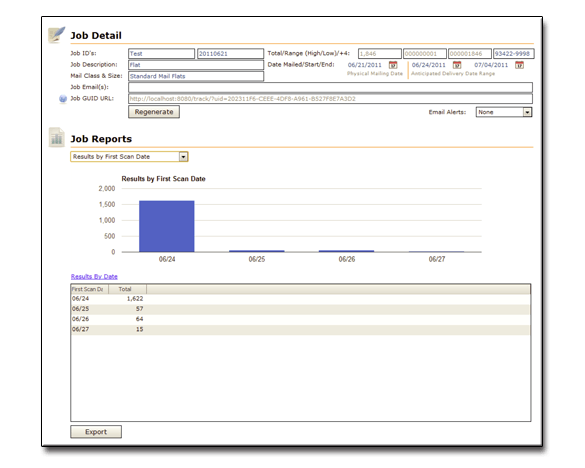
One of DynamiCard’s current AccuTrace reports is the First Scan Report. This creates an early campaign checkpoint. Instead of waiting until the estimated in-home period to begin examining delivery activity, marketers gain an earlier indication that campaign processing is underway. That can help answer an important operational question:
Has postal activity begun for this campaign?
The information becomes even more useful when viewed as part of the complete delivery timeline.
Out for Delivery Reporting
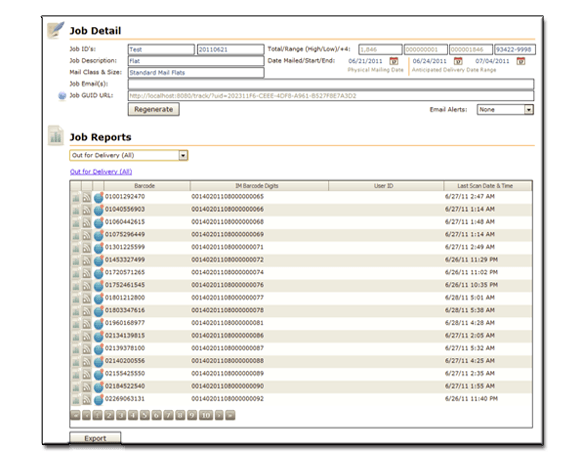
DynamiCard also currently provides an Out for Delivery Report. This stage is particularly important to marketers because it moves the campaign closer to actual customer exposure. When substantial portions of a mailing reach this stage, businesses can prepare for response. That may mean:
- Alerting sales representatives
- Preparing customer-service teams
- Increasing appointment availability
- Checking promotional inventory
- Monitoring tracked phone numbers
- Watching QR activity
- Coordinating digital campaigns
Delivery tracking therefore becomes operational intelligence — not simply postal information.
In-Home Delivery Tracking
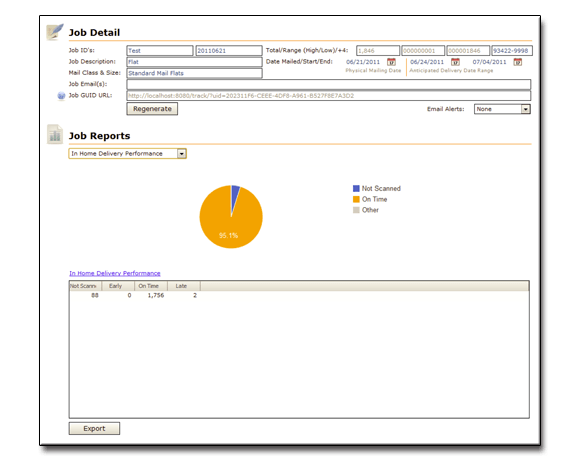
DynamiCard already promotes In-Home Delivery Tracking as one of its major company differentiators, describing it as a way to understand when mail will arrive through progress reporting.
For marketers, the in-home period can serve as the bridge between:
Campaign Distribution and Campaign Response
Once mail begins reaching households, other performance signals become more meaningful.
In-Home Performance Reports
DynamiCard’s current Delivery Tracking page includes an In-Home Performance Report within its AccuTrace reporting suite. This reporting layer can help marketing teams better understand campaign delivery timing rather than relying entirely on the original mailing date. That’s particularly valuable for time-sensitive promotions.
If an offer starts Friday, for example, knowing whether the mailing is actually reaching households near the intended period matters. Campaign timing should account for the delivery window — not simply the production calendar.
Results by State Reporting
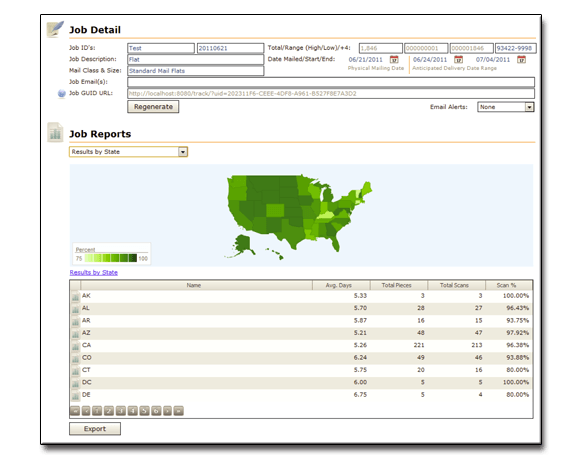
National and multi-state campaigns create another challenge. Mail may not progress identically across every geographic market. DynamiCard’s current platform includes a Results by State Report. That provides an additional geographic reporting layer for campaigns spanning multiple states.
For national marketers, this can help create context around differences in:
- Delivery timing
- Response timing
- Call activity
- QR engagement
- Redemption
- Other campaign results
Geographic delivery information becomes especially valuable when response is also being analyzed geographically.
Direct Mail Scan Reporting
Scan information becomes useful when it answers a business question. The objective shouldn’t be to collect postal data simply because the data exists. Marketers should use direct mail scan reporting to investigate questions such as:
- Has campaign processing begun?
- Is the campaign progressing toward delivery?
- When should customer response begin?
- Are different geographic areas progressing differently?
- When should supporting marketing activate?
- When is it reasonable to begin evaluating campaign response?
Those are business questions. Delivery data provides context for answering them.
Delivery Analytics vs. Response Analytics
These concepts should remain separate.
Delivery Analytics
Answers questions about when and where the mail campaign progresses toward the customer.
Response Analytics
Answers questions about what customers do after receiving the campaign.
For example:
Delivery data
Mail begins reaching homes Tuesday.
Response data
Phone calls begin increasing Wednesday.
QR data
Digital scans increase Wednesday and Thursday.
Redemption data
Offers begin being redeemed Thursday.
Combined, these signals tell a much richer campaign story.
Connect Delivery Timing to Customer Response
One of the most useful applications of delivery tracking is aligning delivery activity with response. Consider this sequence:
- Monday — First postal scan activity appears.
- Wednesday — Mail begins approaching delivery.
- Thursday — Significant in-home activity begins.
- Thursday–Friday — Phone calls increase.
- Friday–Saturday — QR scans and redemptions increase.
Now the marketing team has context. Instead of simply reporting:
“We received 75 calls this week.”
“Did call activity increase as the direct mail entered homes?”
That is a much more meaningful marketing question.
Coordinate Phone Tracking with Mail Delivery
Phone response can become more informative when compared against delivery timing. DynamiCard maintains a separate Phone Tracking technology for associating inbound calls with direct-mail campaigns. When used together:
Delivery Tracking helps answer
When was the campaign entering the market?
Phone Tracking helps answer
When did customers begin calling?
The combination creates a clearer timeline from physical distribution to customer action.
Coordinate QR Tracking with Delivery
The same principle applies to QR engagement. DynamiCard’s Dynamic QR Code Tracking technology can create a measurable digital response pathway from a physical postcard. The combined timeline becomes:
- Mail Processing
- In-Home Delivery
- QR Scan
- Landing Page Engagement
- Lead or Conversion
Delivery timing gives QR activity additional context. If scan activity increases immediately after the expected in-home period, marketers have a stronger understanding of how the physical campaign and digital response relate.
Connect Delivery Data with DynamiScan
DynamiScan adds another measurement layer. DynamiCard’s existing Tracking & Analytics platform uses DynamiScan to analyze areas such as respondent demographics, offer performance, customer capture, and other campaign-response information. That creates distinct measurement stages:
Delivery Tracking
When did mail reach the market?
QR Tracking
Who engaged digitally?
Phone Tracking
Who called?
DynamiScan
What can redemption and customer information reveal?
Tracking & Analytics
What does the combined campaign performance tell us?
This distinction is important for both users and SEO.
Use Delivery Tracking to Improve Campaign Timing
Direct mail timing should be planned around the customer, not merely the print schedule. Delivery information can help marketers improve coordination around:
Offer Start Dates
Avoid creating unnecessary gaps between mail arrival and promotional availability.
Offer Expiration Dates
Make sure recipients have a reasonable opportunity to respond.
Events
Coordinate mail delivery with event timing.
Seasonal Campaigns
Align campaigns with relevant customer demand periods.
Sales Staffing
Prepare employees when campaign-driven activity is likely to begin.
Inventory
Ensure promoted products are available when recipients respond.
Appointment Capacity
Prepare scheduling teams for campaign-driven inquiries.
Coordinate Direct Mail with Digital Advertising
Modern direct mail campaigns do not need to operate independently from digital marketing. Delivery timing can help coordinate:
- Paid search
- Display advertising
- Social advertising
- Retargeting
- Addressable geofencing
- Other digital campaigns
A coordinated strategy might look like:
- Direct Mail Enters Market
- Digital Advertising Reinforces Message
- Customer Recognizes Brand Across Channels
- Customer Calls, Scans, Visits, or Converts
The physical and digital campaigns support the same customer journey.
Delivery Tracking + Addressable Geofencing
Addressable geofencing provides an especially natural cross-channel connection. DynamiCard already offers geofencing as part of its technology ecosystem alongside Delivery Tracking, Phone Tracking, and Dynamic QR Code Tracking.
A coordinated campaign can use physical mail to reach targeted households while digital advertising reinforces the campaign through another channel. Delivery timing provides additional context for when those channels overlap.
Delivery Tracking for Time-Sensitive Offers
Campaign timing becomes particularly important when an offer has a defined promotional period. Examples might include:
- Grand openings
- Seasonal promotions
- Limited-time discounts
- Events
- Restaurant promotions
- Retail sales
- Service specials
Imagine a promotion expires too soon after the mail arrives. Recipients may feel rushed or never have a meaningful opportunity to respond. Tracking delivery progress can help businesses better understand whether campaign timing aligns with the promotional calendar.
Mail Delivery Tracking for Multi-Location Businesses
Multi-location campaigns introduce greater complexity. Different locations may operate in:
- Different cities
- Different states
- Different postal markets
- Different customer territories
A national campaign may therefore need to examine delivery progress at more than one geographic level. DynamiCard’s existing Results by State reporting is particularly relevant here. Marketing teams can then compare delivery timing with location-level response where their campaign infrastructure supports it.
Delivery Tracking for Franchise Campaigns
Franchise marketing often requires centralized execution with local visibility. Delivery reporting can help franchisors and franchisees understand when campaigns are entering local markets. That may help coordinate:
- Local staffing
- Promotional readiness
- Sales activity
- Digital advertising
- Campaign reporting
Rather than telling every location, “The campaign mailed last week,” marketing teams can provide more useful context around campaign progress.
Delivery Tracking for Restaurants
Restaurants often use direct mail for:
- New-customer acquisition
- Grand openings
- Limited-time promotions
- Loyalty campaigns
- Seasonal offers
- Catering
Timing can directly affect campaign execution. If a major promotion is expected to generate restaurant traffic, the location should be operationally prepared when the mail begins reaching customers.
Delivery Tracking for Home Services
HVAC, plumbing, roofing, electrical, landscaping, pest-control, and other home-service businesses can also benefit from understanding campaign timing. Delivery information may help teams prepare:
- Dispatch
- Call handling
- Estimates
- Appointment availability
- Sales follow-up
This is particularly useful for large or multi-market campaigns where response may arrive unevenly.
Delivery Tracking for Retail
Retail campaigns often revolve around:
- Promotions
- Sales
- New openings
- Product launches
- Loyalty
- Customer reactivation
Knowing when mail begins reaching households can help stores coordinate inventory, staffing, digital support, and promotional execution.
Delivery Tracking for Healthcare Marketing
Dental practices, chiropractors, MedSpas, and other appointment-oriented businesses may use direct mail to generate new-patient or new-client inquiries. Understanding when mail enters homes can help practices prepare front-desk teams and appointment availability for campaign response.
Delivery data can then be compared with:
- Tracked calls
- QR engagement
- Appointment requests
- New-patient conversions
Delivery Tracking for Real Estate Direct Mail
Real estate professionals frequently use direct mail for:
- Geographic farming
- Seller prospecting
- Buyer campaigns
- Listings
- Open houses
- Property-specific promotions
Delivery timing is especially useful when the campaign is connected to a specific event. An open-house postcard, for example, needs to reach recipients with enough time for the message to influence attendance.
When Should You Evaluate Direct Mail Results?
One common measurement mistake is evaluating a campaign too early. The print date isn’t necessarily the customer exposure date. The mailing date isn’t necessarily the in-home date. And the first in-home date isn’t necessarily the final response date.
A better evaluation framework is:
- Campaign Mailed
- Delivery Activity Begins
- In-Home Window Develops
- Customer Response Begins
- Response Continues
- Campaign Results Mature
Only then should marketers make stronger conclusions about performance. Delivery tracking helps provide context for that timeline.
Don’t Confuse Delivery with Conversion
Delivery is a critical campaign milestone. But a delivered postcard is not a conversion. A complete funnel might look like:
- Mailpiece Produced
- Mailpiece Processed
- Mailpiece Reaches Market
- Customer Engages
- Lead Generated
- Customer Converts
- Revenue Generated
Each stage answers a different question. Delivery Tracking owns the first half of that journey. DynamiCard’s broader Tracking & Analytics ecosystem helps marketers evaluate what happens afterward.
How DynamiCard Direct Mail Delivery Tracking Works
- Build the CampaignDefine the audience, offer, creative, mailpiece, and response strategy.
- Prepare the MailingCoordinate production and postal execution.
- Launch the CampaignEnter the mailing into the postal process.
- Monitor Initial ActivityUse available First Scan reporting to begin monitoring progress.
- Monitor Delivery ProgressReview Out for Delivery and other available progress information.
- Evaluate In-Home PerformanceUse available reporting to better understand when mail is entering homes.
- Review Geographic ResultsFor applicable campaigns, evaluate state-level delivery reporting.
- Monitor Customer ResponseCompare delivery timing with calls, QR scans, redemptions, leads, and other available campaign signals.
- Analyze the CampaignConnect delivery information with broader performance data.
- Improve Future TimingUse what was learned to plan the next mailing more intelligently.
Why Choose DynamiCard for Mail Delivery Tracking?
DynamiCard doesn’t position delivery reporting as an isolated postal feature. It sits within a broader direct-mail technology ecosystem.
AccuTrace Progress Reports
The current Delivery Tracking page specifically identifies AccuTrace as its progress-reporting system.
First Scan Reporting
Gain an earlier campaign-progress checkpoint.
Out for Delivery Reporting
Get greater visibility as mail approaches its destination.
In-Home Performance Reporting
Better understand the campaign’s in-home timing.
Results by State
Add geographic reporting for applicable multi-state campaigns.
Phone Tracking
Measure calls associated with direct-mail campaigns.
Dynamic QR Tracking
Measure physical-to-digital engagement.
DynamiScan
Analyze deeper campaign response and customer information.
Strategic Support
DynamiCard also positions strategic and postal guidance as part of its broader turnkey offering.
The objective is not simply to know where the mail is. It’s to make delivery timing useful to the marketing strategy.
Frequently Asked Questions About Mail Delivery Tracking
What is mail delivery tracking?
Mail delivery tracking gives marketers greater visibility into the progress and timing of a direct-mail campaign as it moves toward recipients.
Does DynamiCard offer direct mail delivery tracking?
Yes. DynamiCard’s existing /delivery-tracking/ page offers AccuTrace Progress Reports and currently identifies First Scan, Out for Delivery, In-Home Performance, and Results by State reporting.
What is in-home delivery tracking?
In-home delivery tracking helps marketers better understand when direct mail is reaching or expected to reach recipient households, providing useful timing context for campaign response.
Does DynamiCard provide USPS tracking integration?
DynamiCard’s current delivery platform is built around direct-mail progress and delivery reporting. For implementation, I recommend DynamiCard verify the exact underlying USPS data source/integration terminology before making a technical claim about a specific USPS API or service; the current public page does not identify one by name.
What is a First Scan Report?
DynamiCard currently lists First Scan as one of its AccuTrace delivery reports, providing an early reporting stage in campaign progress.
Can DynamiCard report delivery results by state?
Yes. Results by State is one of the reports currently displayed on DynamiCard’s Delivery Tracking page.
Why does direct mail delivery timing matter?
Timing helps businesses coordinate promotions, staffing, supporting advertising, response monitoring, and campaign evaluation around when customers are actually receiving the mail.
Can delivery tracking be combined with phone tracking?
Yes. Delivery timing can provide context around when tracked call activity begins after a campaign enters the market.
Can delivery tracking be combined with QR tracking?
Yes. Comparing delivery activity with QR engagement can help marketers understand when digital response begins relative to the in-home period.
Is delivery tracking the same as direct mail analytics?
No. Delivery tracking focuses primarily on campaign progress and timing. Broader direct-mail analytics evaluates customer engagement, response, attribution, conversion, and other performance signals.