EDDM vs. Targeted Direct Mail: Which Mailing Strategy Is Right for Your Business?
Choosing between Every Door Direct Mail and targeted direct mail comes down to one central question: do you need to reach a geographic area broadly, or a more specifically defined audience?
DynamiCard helps businesses compare EDDM vs. targeted mailing based on campaign goals, geographic reach, audience requirements, offer, and desired customer response.
Both strategies use physical mail to put your message directly in front of potential customers. The difference is primarily in how the audience is selected. Every Door Direct Mail focuses heavily on geography and USPS carrier routes. Targeted direct mail gives businesses more flexibility when reaching a more selectively defined audience is important.
Neither option is automatically better. The right choice depends on who you want to reach and what you need the campaign to accomplish.
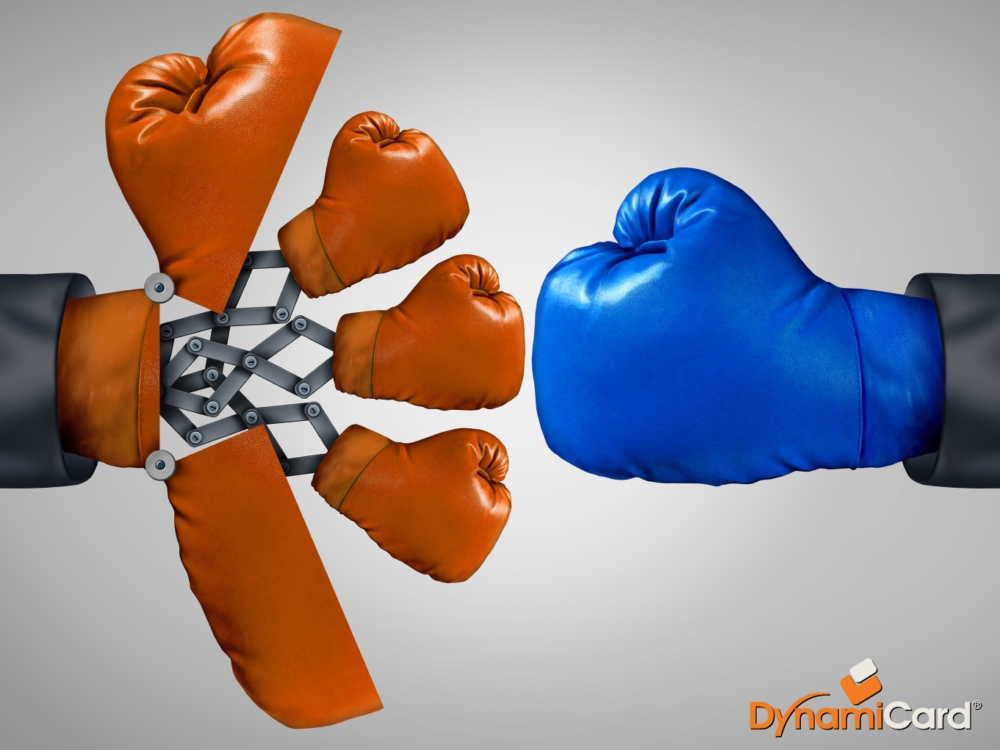
What Is the Difference Between EDDM and Targeted Direct Mail?
The simplest way to understand EDDM vs. direct mail targeting is to compare how each strategy chooses recipients.
EDDM
Every Door Direct Mail is built around geographic coverage. Businesses select USPS carrier routes and can reach addresses throughout those chosen routes. The strategy is especially relevant when most households within a geographic area could reasonably become customers.
Targeted Direct Mail
Targeted direct mail puts greater emphasis on audience selection. Rather than reaching every address throughout a selected carrier route, the campaign is developed around reaching a more specifically defined group of recipients.
In short:
EDDM asks: “Which neighborhoods should we reach?”
Targeted direct mail asks: “Which audience should receive this campaign?”
That distinction should guide the decision.
EDDM vs. Targeted Mailing at a Glance
| Campaign Consideration | EDDM | Targeted Direct Mail |
|---|---|---|
| Primary targeting approach | Geographic | Audience-focused |
| Uses USPS carrier routes | Yes | Not necessarily the primary targeting method |
| Designed for broad neighborhood coverage | Strong fit | Depends on audience strategy |
| Greater audience selectivity | More limited | Stronger fit |
| Useful for location-driven businesses | Often | Yes, depending on targeting |
| Good for broad local awareness | Often | Possible |
| Good for more defined audience segments | Less precise | Often |
| Campaign strategy centered on | Where customers are | Who customers are |
| Best choice depends on | Geography and offer | Audience requirements and offer |
The comparison should not be reduced to cost alone. Audience relevance is often more important than simply choosing whichever option reaches the largest number of households.
What Is Every Door Direct Mail?
Every Door Direct Mail, commonly called EDDM, is a geographically focused mailing approach that allows businesses to reach addresses throughout selected USPS carrier routes. Rather than creating an individually selected mailing audience, EDDM focuses on where recipients live. That makes it useful for businesses whose potential customers are broadly distributed throughout particular neighborhoods or local service areas.
The core idea is simple:
Choose the area. Reach the addresses within the selected route. Deliver the offer.
DynamiCard can connect EDDM strategy with postcard printing, mailing, and tracking technologies.
What Is Targeted Direct Mail?
Targeted direct mail is a mailing strategy built around reaching a more specifically defined audience instead of relying primarily on complete carrier-route coverage. The approach can make sense when the characteristics of the audience matter more than simply reaching every household in a neighborhood.
A business may determine that broad geographic exposure would include too many recipients who are unlikely to become customers. In that situation, a more selective approach may make better strategic sense. Targeted direct mail still uses the same basic marketing fundamentals:
- Relevant audience
- Clear message
- Compelling offer
- Strong physical mailpiece
- Defined response path
- Campaign measurement
The difference is that audience selection becomes more central to the campaign.
When Does EDDM Make Sense?
EDDM can be particularly useful when geography strongly influences customer acquisition. Consider EDDM when:
- Your business serves most households within a local area
- Your offer has broad relevance
- Neighborhood awareness is important
- You are promoting a local business or location
- You want broad exposure throughout selected carrier routes
- You are entering a new geographic market
- You want to increase visibility within nearby communities
The important consideration is whether a large percentage of households within the selected area could realistically become customers. If the answer is yes, broad geographic coverage may be appropriate.
When Does Targeted Direct Mail Make Sense?
Targeted mailing may be more appropriate when audience specificity matters. Consider targeted direct mail when:
- Your ideal customer represents a narrower audience
- Reaching every household in a geographic area would create unnecessary coverage
- Audience characteristics are important to campaign relevance
- The offer is not appropriate for everyone within a neighborhood
- You need more control over who receives the campaign
- Your marketing objective depends on reaching a defined customer segment
Targeting can help concentrate campaign resources on recipients more closely aligned with the customer profile.
Geography vs. Audience: The Most Important Difference
One of the easiest ways to compare targeted direct mail vs. EDDM is to think about what drives the campaign.
EDDM Starts with the Map
Where does the business want to be visible? Which neighborhoods matter? Which service areas should receive the message?
The campaign begins with geography.
Targeted Mail Starts with the Customer
Who is the intended recipient? Which group is most relevant to the offer? How selective does the campaign need to be?
The campaign begins with audience definition.
Both can involve geography. The difference is which factor leads the strategy.
EDDM for Local Awareness
Some businesses need to become recognizable throughout a local market before customers have an immediate reason to respond. EDDM can help support that type of awareness campaign. A postcard may introduce:
- The business
- Its location
- Core services
- A promotion
- A seasonal message
- A clear response path
Because the campaign reaches addresses throughout selected carrier routes, it can create broad physical visibility within the target area. This can be useful when market presence is an important part of the objective.
Targeted Direct Mail for More Specific Offers
Some offers only make sense for particular audiences. In those cases, reaching every household in a carrier route may not align with the campaign. A targeted mailing strategy allows the audience selection process to play a greater role. That can help align:
Recipient with Offer with Message
The closer those three elements are connected, the more relevant the campaign can become.
EDDM vs. Targeted Direct Mail for Customer Acquisition
Both approaches can support customer acquisition. They simply approach the audience differently.
EDDM Customer Acquisition
EDDM can introduce a business to many households throughout a selected area. It may be a good fit when the customer pool is broad and location matters heavily.
Targeted Customer Acquisition
Targeted mailing concentrates the campaign on a more defined group. It may be appropriate when potential customers need to meet more specific criteria before the offer becomes relevant.
The better campaign is the one that aligns more closely with the business’s actual customer profile.
EDDM vs. Targeted Mailing for Service-Area Businesses
Businesses operating within clear service areas often have a strong reason to evaluate EDDM. For example, an HVAC, roofing, or plumbing company may want greater visibility throughout neighborhoods it already serves. Broad geographic reach may align well with the business model.
But even service-area businesses may have campaigns where more selective audience targeting makes sense. This is why the correct choice should be made at the campaign level, not simply at the company level. A business can use different strategies for different campaigns.
EDDM vs. Targeted Direct Mail by Industry
The right strategy often depends on the industry and the specific campaign.
Restaurants
EDDM can work well for grand openings and general neighborhood awareness. Targeted mail may be better for loyalty campaigns or offers built around existing customer data.
HVAC
EDDM can support broad seasonal maintenance campaigns. Targeted mail may work better for reactivation campaigns using existing customer information.
Dental
EDDM can help build local awareness for a new or growing practice. Targeted mail may be more appropriate for reaching specific patient segments or reactivating former patients.
Real Estate
EDDM can support geographic farming strategies. Targeted mail may work better for reaching specific homeowner segments, such as potential sellers.
How Does Postcard Creative Change Between EDDM and Targeted Mail?
Creative decisions can shift depending on the mailing strategy.
EDDM Creative
Because the message reaches a broader audience, the creative often needs to appeal to a wider range of recipients while remaining clear and relevant.
Targeted Creative
Because the audience is more specifically defined, the creative can speak more directly to that group’s particular needs or interests.
In both cases, the fundamentals of strong direct mail creative remain the same:
- Clear brand identity
- One primary message
- Strong offer
- Obvious call to action
EDDM vs. Targeted Mailing Costs
Cost is often one of the first questions businesses ask when comparing EDDM and targeted direct mail. Several factors typically influence total campaign cost, including:
- Mailing quantity
- Postcard format
- Design and creative
- Data or audience requirements
- Postage
- Printing
- Tracking technology
- Additional campaign services
- Overall campaign complexity
Rather than assuming one strategy is automatically cheaper, businesses should ask:
Which approach delivers the strongest return for this specific campaign?
Reach vs. Relevance
A useful way to frame the decision is reach versus relevance.
EDDM Emphasizes Reach
More households see the message. Not every recipient is guaranteed to be an ideal customer.
Targeted Mail Emphasizes Relevance
Fewer total recipients, but each one may be more closely aligned with the offer.
Neither approach is inherently superior. The right balance depends on the campaign’s objective, the offer, and the realistic customer profile.
Does Targeted Direct Mail Always Perform Better?
Not necessarily. Targeted mail can underperform when:
- The audience data is inaccurate or outdated
- The targeting criteria are too narrow
- The offer does not match the selected audience
- The creative fails to resonate
- The campaign volume becomes too small to generate meaningful results
Targeting improves relevance. It does not automatically guarantee performance. The strategy still depends on a strong offer, clear creative, and appropriate execution.
Does EDDM Mean No Targeting?
Not entirely. Even within EDDM, businesses still make an important targeting decision: which carrier routes to select. Choosing the right routes based on business location, service area, or market opportunity is itself a form of targeting. EDDM simply applies that decision at the geographic level rather than the individual recipient level.
Can You Track EDDM Campaigns?
Yes. Even though EDDM emphasizes geography, campaigns can still incorporate measurable technology. DynamiCard’s tracking ecosystem can help EDDM campaigns include:
- Dynamic QR codes
- Call tracking
- Delivery tracking
- Analytics designed to evaluate campaign response
Geographic reach and measurable technology are not mutually exclusive.
Can You Track Targeted Direct Mail?
Yes. Targeted direct mail campaigns can incorporate the same broad range of tracking capabilities. Because the audience is more specifically defined, tracking can also support more advanced analysis, such as evaluating:
- Which audience segments perform best
- Which offers generate stronger response
- Which creative resonates with specific customer groups
- Which campaigns should be repeated
- Which strategies should change
- How targeted campaigns compare with EDDM campaigns over time
Using QR Codes with EDDM and Targeted Mail
Dynamic QR codes can support either mailing strategy.
QR Codes with EDDM
Give a broad audience an easy way to engage digitally, helping create measurable interactions even within a geographically driven campaign.
QR Codes with Targeted Mail
Connect a more specifically defined audience with a highly relevant digital destination, reinforcing the personalized nature of the campaign.
In both cases, the QR code should give recipients a clear reason to scan.
Using Call Tracking with EDDM and Targeted Direct Mail
Phone response can matter across both mailing strategies, particularly for businesses such as:
- Home services
- Healthcare practices
- Real estate
- Automotive services
- Restaurants with phone-based reservations or catering
- Other appointment- or inquiry-driven businesses
Call tracking direct mail can help connect phone response with either a broad EDDM campaign or a more selectively targeted mailing.
Using Delivery Tracking to Understand Campaign Timing
Whether a business chooses EDDM or targeted direct mail, understanding delivery timing can add valuable context. Delivery tracking can help businesses:
- Coordinate promotional timing
- Prepare sales or service teams
- Align supporting digital advertising
- Better interpret when customer response should begin
- Evaluate campaigns using a more complete timeline
EDDM, Targeted Mail, and Addressable Geofencing
Both mailing strategies can also be extended into digital advertising. DynamiCard’s addressable geofencing strategy can serve online ads to the same households receiving direct mail, creating a cross-channel campaign that reinforces the physical mailpiece with additional digital exposure. This can work alongside either a broad EDDM campaign or a more selectively targeted mailing.
Paper vs. Plastic for EDDM and Targeted Campaigns
The choice between paper and plastic postcards is separate from the EDDM-vs-targeted decision, but the two decisions can work together. DynamiCard’s product strategy includes both traditional paper postcards and distinctive plastic mailers. A broad EDDM awareness campaign might use a straightforward paper format, while a more selectively targeted campaign built around a premium offer might benefit from the physical distinctiveness of a plastic postcard. The format decision should be based on the campaign’s creative and promotional needs rather than the mailing method alone.
How to Choose Between EDDM and Targeted Direct Mail
- Define the campaign objective.Are you building general awareness or targeting a specific opportunity?
- Evaluate your ideal customer.Is your customer base broad, or does it require narrower audience criteria?
- Assess your geographic market.Would most nearby households realistically become customers?
- Consider the offer.Is the promotion relevant to a wide audience, or only to a specific group?
- Determine your available data.Do you have access to relevant customer or prospect information?
- Factor in campaign goals.Are you trying to maximize reach, relevance, or both?
- Decide how you’ll measure success.What does a successful outcome look like for this specific campaign?
EDDM vs. Targeted Direct Mail Decision Guide
Choose EDDM When
- Your business serves most nearby households
- Your offer has broad appeal
- You need visibility throughout a specific geographic area
- You are introducing a new location
Choose Targeted Direct Mail When
- Your ideal customer is more narrowly defined
- Audience relevance matters more than broad reach
- Your offer applies to a specific segment
- You are using existing customer or prospect data
Some businesses use both strategies for different campaigns within the same overall marketing plan.
Can DynamiCard Help Choose the Right Strategy?
Yes. The purpose of campaign planning is to determine which mailing approach best aligns with the business objective. DynamiCard can help evaluate:
- Business goals
- Geographic market
- Target audience
- Available data
- Offer strategy
- Budget
- Desired response and tracking approach
Businesses do not need to choose alone. The right strategy should reflect the campaign’s actual objective.
Frequently Asked Questions About EDDM vs. Targeted Direct Mail
What is the difference between EDDM and targeted direct mail?
EDDM focuses on reaching addresses throughout selected USPS carrier routes, emphasizing geography. Targeted direct mail focuses on reaching a more specifically defined audience.
Is EDDM cheaper than targeted direct mail?
Not necessarily. Costs depend on mailing volume, format, audience data, and other campaign requirements. Businesses should evaluate total campaign investment rather than assuming one method is automatically less expensive.
Can EDDM campaigns include QR codes?
Yes. EDDM campaigns can incorporate QR Code Direct Mail as part of the mailpiece design.
Can both EDDM and targeted campaigns use call tracking?
Yes. Call tracking can be incorporated into either EDDM or targeted direct mail campaigns.
Which is better for a new business location?
EDDM can be especially useful for introducing a new location to the surrounding neighborhood. Targeted mail may be more appropriate when the new location is trying to reach a specific customer segment.
Can a business use both EDDM and targeted direct mail?
Yes. Many businesses use both strategies for different campaigns depending on the objective.
Does targeted direct mail always perform better than EDDM?
No. Performance depends on audience quality, offer relevance, creative, and execution — not simply the mailing method.
Which costs less: EDDM or targeted direct mail?
There’s no universal answer — total costs depend on mailing volume, format, audience data, and other campaign requirements. Request a quote for pricing specific to your campaign.
Can plastic postcards be used with either strategy?
Yes. Plastic postcards can be used with EDDM or targeted direct mail campaigns depending on the creative and promotional strategy.
How do I know which strategy is right for my business?
The right approach depends on your business objective, ideal customer, geographic market, offer, and available data. DynamiCard can help evaluate those factors together.